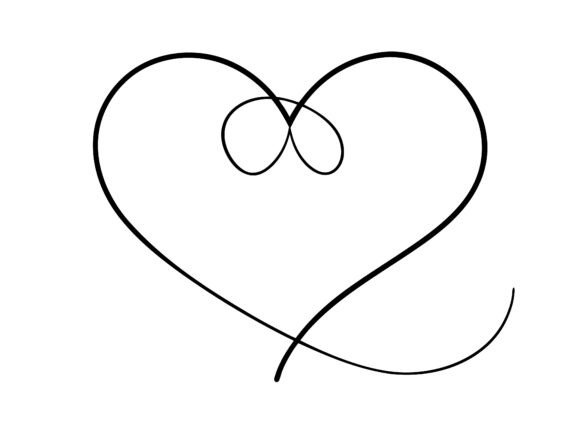
Continuous One Line Heart Outline Vector Review
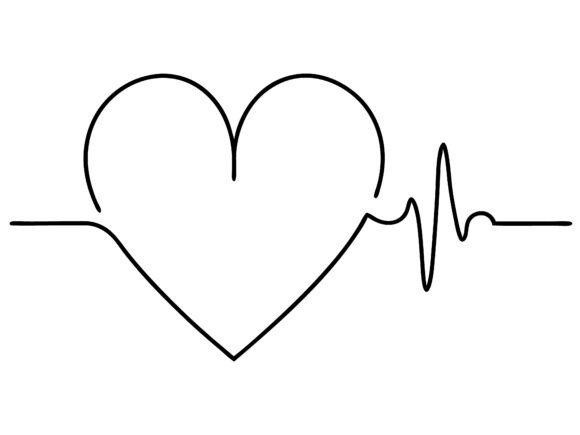
I have spent years reviewing embroidery files for my own boutique and for clients who need reliable assets for their handmade shops. Most of the time, I am looking for stitch counts, file formats, and hoop compatibility. But with a product like Continuous One Line Heart Outline Vector, the technical specs are secondary to the visual soul of the design. This is not just another generic heart shape; it is a piece of graphic art that demands to be translated into thread.
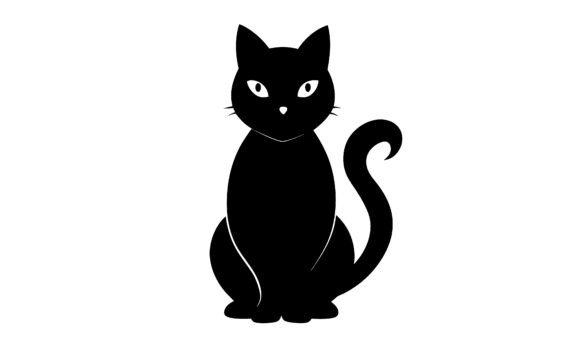
The description mentions a single continuous black line forming a cute cartoon cat with large eyes and a swirling tail. This is a fascinating contradiction in terms. The title says "Heart," but the visual description paints a picture of a feline friend. In the world of digital graphics, this works perfectly as a whimsical illustration. However, when you are an experienced designer preparing to stitch this on real fabric, you have to pause and ask: does the machine see a heart or a cat? Or perhaps, does the continuous line technique create a silhouette where the two concepts merge? Regardless of the specific interpretation, the core value here lies in its minimalism and the promise of a clean, modern aesthetic.
First Impressions and Visual Mood
When I first loaded the vector file into my digitizing software, the immediate feeling was one of lightness. There is no heavy fill stitch cluttering the design. It relies entirely on the elegance of a running stitch or a satin path to define the form. This creates a mood that is playful yet sophisticated. It feels right at home in a nursery, on a trendy tote bag, or as a subtle accent on a denim jacket. The stark contrast of a single line against white background translates well to embroidery, suggesting high clarity and sharp definition.
For crafters and Etsy sellers, this visual personality is gold. It avoids the dated look of overly dense, boxy designs. Instead, it offers a contemporary feel that appeals to younger demographics and those who appreciate modern, minimalist decor. The "swirling tail" mentioned in the description adds a dynamic element that prevents the design from looking static. It suggests movement, which is crucial when translating 2D vector art into 3D thread.
Real-World Application: The Tote Bag Scenario
Let me walk you through a practical scenario. Imagine you are preparing inventory for a holiday market. You have a batch of plain canvas tote bags ready for customization. You want something unique that stands out on a crowded table without overwhelming the natural texture of the fabric. You decide to use the Continuous One Line Heart Outline Vector.
Because the design is essentially a single line, it allows the canvas weave to peek through slightly, creating a textured, artisanal look that mass-produced patches cannot replicate. If you choose a contrasting thread color—perhaps a soft blush pink or a deep navy blue—the design pops beautifully. The customer reaction is often immediate; they perceive the item as more "handmade" because the stitching follows the organic flow of the line rather than filling every inch with solid blocks of thread.
This same logic applies to sweatshirt embroidery. A continuous line design on a fleece surface can look incredibly chic if executed with the right tension. It becomes a statement piece rather than a decoration. For baby items, the simplicity ensures there are no rough edges or bulky stitches that might irritate sensitive skin, making it a safe and stylish choice for personalized gifts.
Navigating Technical Challenges
However, as a reviewer, I must be realistic about where this design might struggle. The "continuous line" nature means that the entire shape is connected. On small hoop sizes, such as those used for cap embroidery or tiny patches, the curvature of the line might become too tight for the needle to follow smoothly. If the curve is too sharp, the thread could bunch up, ruining the clean look that defines the design.
Texture is another factor. While canvas and cotton work well, applying this to a highly textured fabric like a chunky knit sweater or a bouclé throw pillow might obscure the details. The line needs a relatively flat surface to maintain its integrity. Similarly, stretchy fabrics require careful stabilization. Without a high-quality cut-away stabilizer, the continuous line could pucker or distort after washing, especially since the design likely uses a significant amount of running stitch.
Dark fabrics present a different challenge. A single black line on a dark shirt will be invisible. You would need to digitize a reverse version or use a very bright thread color to ensure visibility. Furthermore, while the design is simple, the corners and curves must be inspected closely. If the vector has any jagged points, the machine might skip stitches or break threads, leading to a messy finished product.
Impact on Product Value and Brand Consistency
In the competitive world of small business merchandise, presentation is everything. Using a clean, professional design like Continuous One Line Heart Outline Vector elevates the perceived value of your products. When a buyer sees a crisp, well-executed line art design on a custom apron or a kitchen towel, they associate that quality with the brand itself. It signals attention to detail and a commitment to aesthetics.
This design is particularly effective for branding. Because it is minimal, it can be scaled down for tags or logos without losing its character. It works seamlessly across various mediums, from a physical embroidered patch to a printable mockup for online listings. For digital product sellers, this vector serves as a versatile asset that can be adapted for sublimation, screen printing, or further digitizing.
Customer trust is built on consistency. If you use this design for a collection of holiday gifts, the uniform style ties the products together, creating a cohesive shop experience. Whether it is a wedding gift or a boutique product, the design conveys a sense of thoughtfulness and care that resonates with buyers looking for personalized items.
Practical Notes for the Embroidery Designer
Before you commit this design to a production run, there are several critical steps you must take. First, always test the design on scrap fabric. Use the exact type of fabric and stabilizer you plan to use for the final project. Check the thread color contrast carefully; sometimes a color that looks good on a screen appears dull once stitched.
Review the stitch density. Since this is a line-based design, the density should be low to medium. If the digitizer has set it too high, the thread will pile up, losing the delicate outline effect. Confirm the hoop size requirements to ensure the design fits your intended garment without hitting the edges of the frame. Inspect the small details, especially the "eyes" and "tail" described in the vector, to ensure they are not too fine for the needle gauge you are using.
It is also wise to test the design in both black and white mockups to visualize how it will look on different backgrounds. Compare light and dark fabric scenarios to determine if you need to adjust the thread colors or add a backing layer. Always use proper stabilizer to prevent distortion, and double-check whether the license terms allow for commercial use of the finished product. If you are selling these items on Etsy or at a craft fair, ensuring you have the rights to sell the physical goods is non-negotiable.
If the file format is not specified, verify that your embroidery machine can read it. Do not assume compatibility. Finally, consider the washability. Designs with long, continuous lines can sometimes unravel if not secured properly at the start and end points. Reinforce these areas during digitizing if necessary.
In conclusion, the Continuous One Line Heart Outline Vector is a promising asset for designers who value clean lines and modern aesthetics. It offers a fresh alternative to traditional, blocky embroidery patterns. With careful execution and a bit of testing, it can transform simple materials into high-value, desirable handmade products. Just remember that the success of the final piece depends on the skill of the operator and the suitability of the materials chosen.